
Semrush vs Keysearch (vs Wordtracker): Which tool to choose in 2026?
Do you need 50+ SEO features, or would you be better served by a more focused approach?
Semrush: The Enterprise Choice
The enterprise choice for large teams and agencies that need comprehensive SEO and marketing tools in one platform. With its massive keyword database, extensive competitor analysis, site audits, content marketing tools, and social media management, it's built for organizations with dedicated teams who can leverage its full capabilities.
The pricing reflects this comprehensive approach.
Keysearch: The Accessible Alternative
Positions itself as the accessible all-in-one alternative, offering keyword research, competitor analysis, rank tracking, and content optimization at budget-friendly pricing. It's designed for bloggers and small businesses who want multiple SEO features without enterprise-level investment.
The credit-based system helps keep costs down while providing solid functionality across various tools.
Wordtracker: Focused Excellence
Takes a different approach for smart marketers who value their time and budget: do three things exceptionally well instead of trying to cover every possible SEO task. Since 1998, we've focused exclusively on keyword research, competitor keyword analysis, and rank tracking.
No social media schedulers. No content assistants. Just the most affordable professional keyword intelligence on the market, designed to save you both time and money.
If Wordtracker's focused approach resonates with you, see it in action...
Semrush vs Keysearch vs Wordtracker at a glance
Before diving deep, here's how these three platforms compare on the essentials:
Here's the fundamental difference: While Semrush and Keysearch compete on feature count, Wordtracker competes on doing the essentials exceptionally well at the lowest price.
| Semrush | Keysearch | Wordtracker | |
|---|---|---|---|
| Philosophy | All-in-one marketing suite | Accessible SEO platform | Most affordable keyword specialist |
| Ease of use | Comprehensive training needed ⭐⭐ | User-friendly interface ⭐⭐⭐⭐ | Use in minutes ⭐⭐⭐⭐⭐ |
| Keyword database | 26 billion keywords ⭐⭐⭐⭐⭐ | 2 billion keywords ⭐⭐⭐ | 2 billion keywords ⭐⭐⭐⭐ |
| Monthly searches | Report-based limits ⭐⭐⭐⭐ | Credit-based (200-500/day) ⭐⭐ | 500/day to Unlimited ⭐⭐⭐⭐⭐ |
| Rank tracking | 500-5,000 keywords ⭐⭐⭐⭐ | 80-200 keywords ⭐⭐ | 1,000-10,000 keywords ⭐⭐⭐⭐⭐ |
| Best value for | Agencies using all features | Bloggers and Small businesses | Smart SEOs looking for the best blend of price and performance |
| Starting price | $139.95/month | $24/month | $24/month |
Different philosophies: All-in-one vs specialized
The SEO tool industry offers two distinct approaches, each with its own merits.
Semrush exemplifies the comprehensive platform philosophy with over 50 tools spanning keyword research, technical SEO, content marketing, social media management, PPC analysis, and local SEO. For agencies managing multiple clients or enterprises with complex marketing needs, having everything in one platform creates efficiency and consistent workflows.
Keysearch provides a middle-ground solution with its own suite of features—content assistants, YouTube research, site audits, and more—at accessible pricing. Their credit-based system helps maintain affordability while offering broader functionality than pure keyword tools. It's designed for users who want to experiment with various SEO features without enterprise investment.
Wordtracker has maintained a consistent philosophy since 1998: be the most affordable professional keyword tool for smart marketers. By focusing exclusively on keyword research, competitor keywords, and rank tracking, we've eliminated the overhead that comes with maintaining dozens of features. This specialization allows us to deliver professional-grade tools at competitive prices while keeping the interface clean and the learning curve minimal.
Each approach serves different user needs and workflows effectively.
Keyword research approaches compared
While all three platforms offer keyword research, their implementations reflect different priorities.
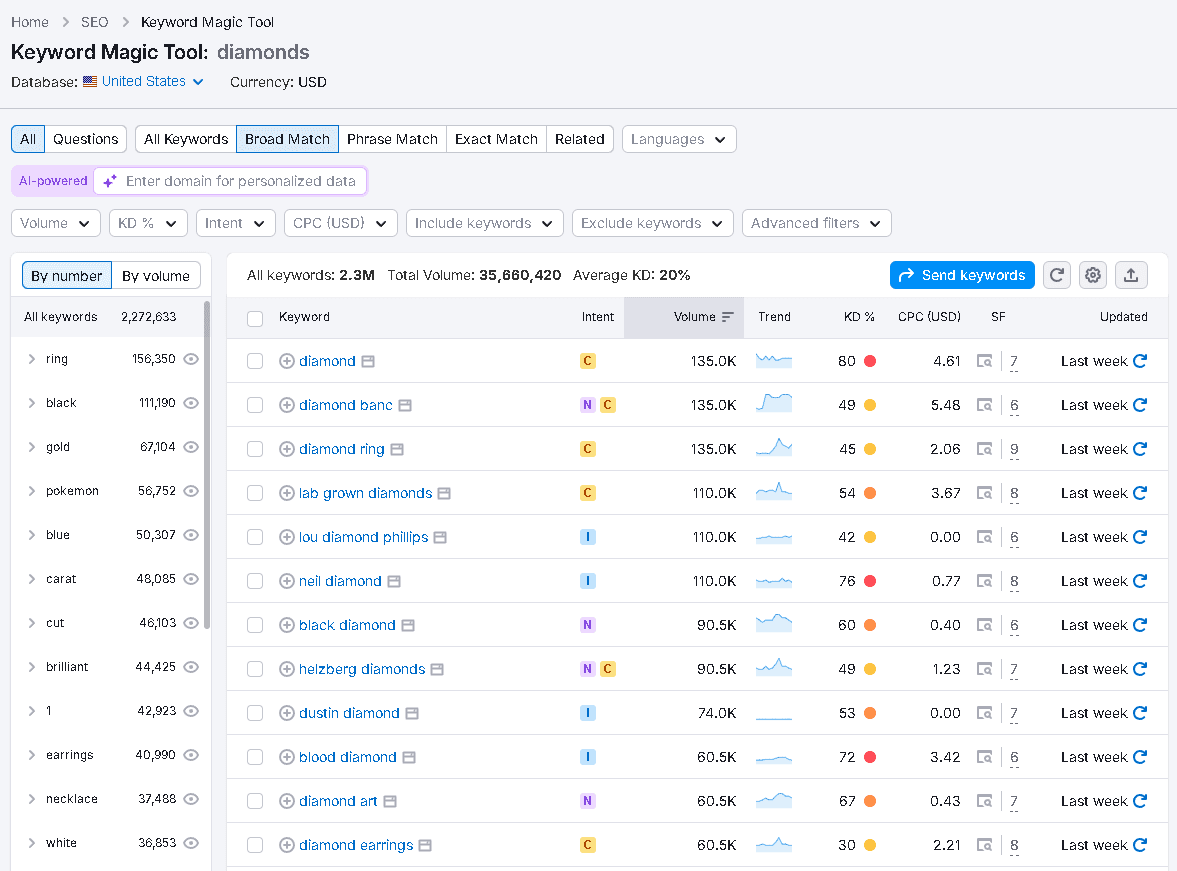
Semrush's approach provides remarkable depth. Enter a seed keyword and access extensive data: keyword variations, questions, related keywords, broad match, phrase match, exact match. The Keyword Magic Tool can generate thousands of suggestions, each with comprehensive metrics. For enterprise teams with dedicated keyword researchers who need to analyze every angle, this depth provides valuable insights.
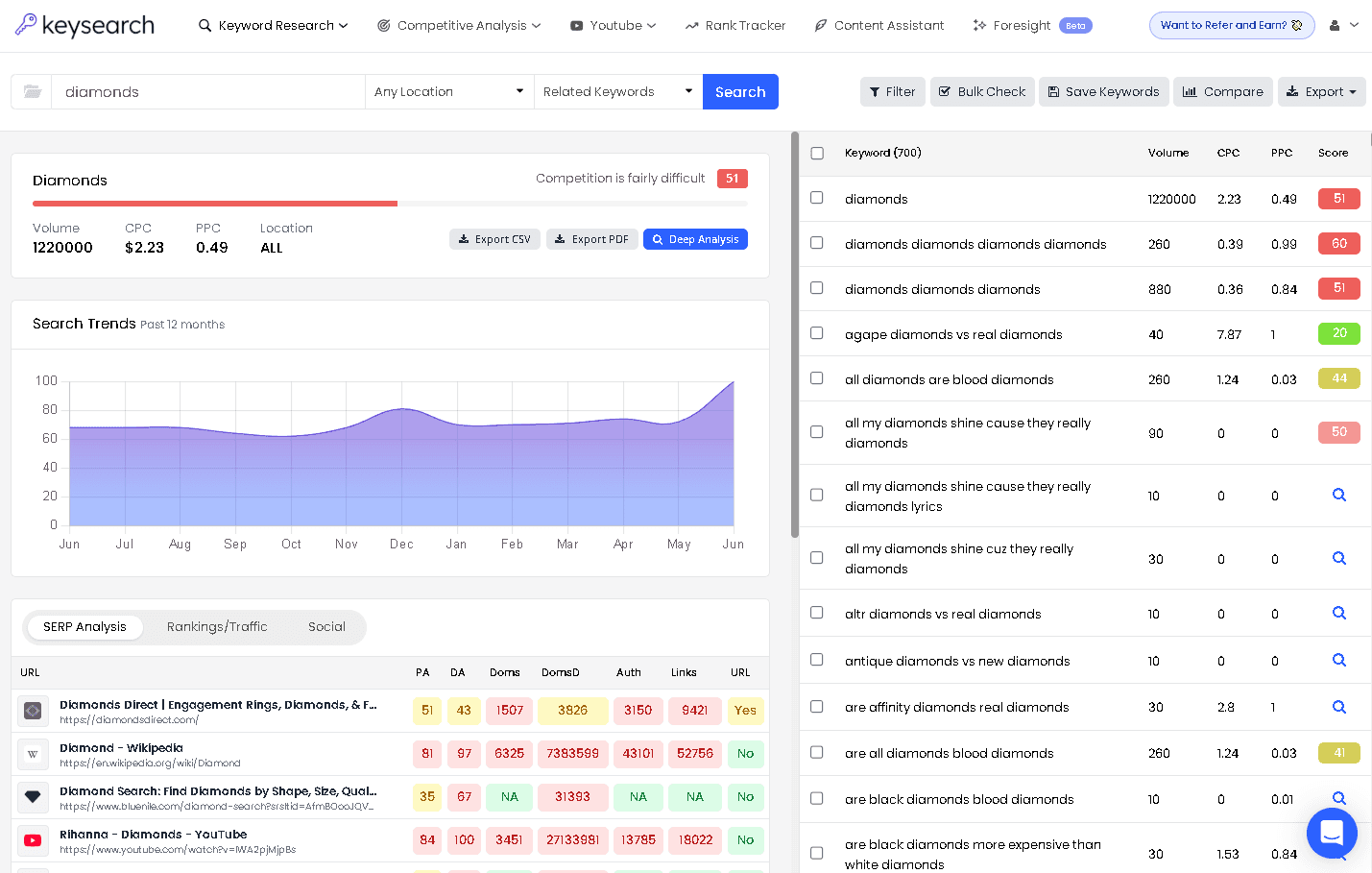
Keysearch streamlines the process with a more approachable interface. Their keyword suggestions come with practical metrics and color-coded difficulty scores that make data interpretation straightforward. The "Quick Difficulty" checker analyzes 50 keywords at once, making bulk research efficient. The credit system (200 searches on Starter, 500 on Pro) helps manage costs while providing solid functionality.
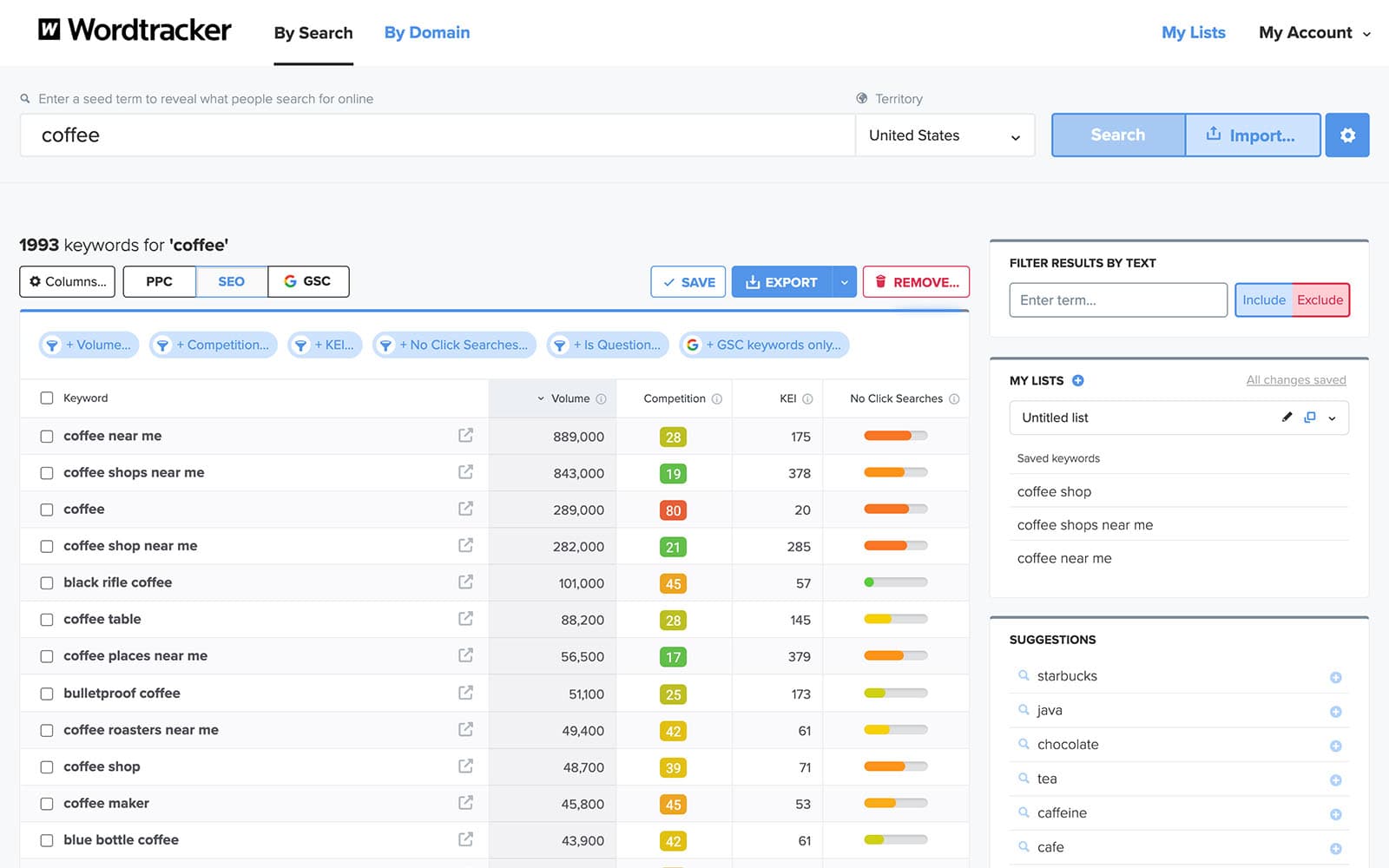
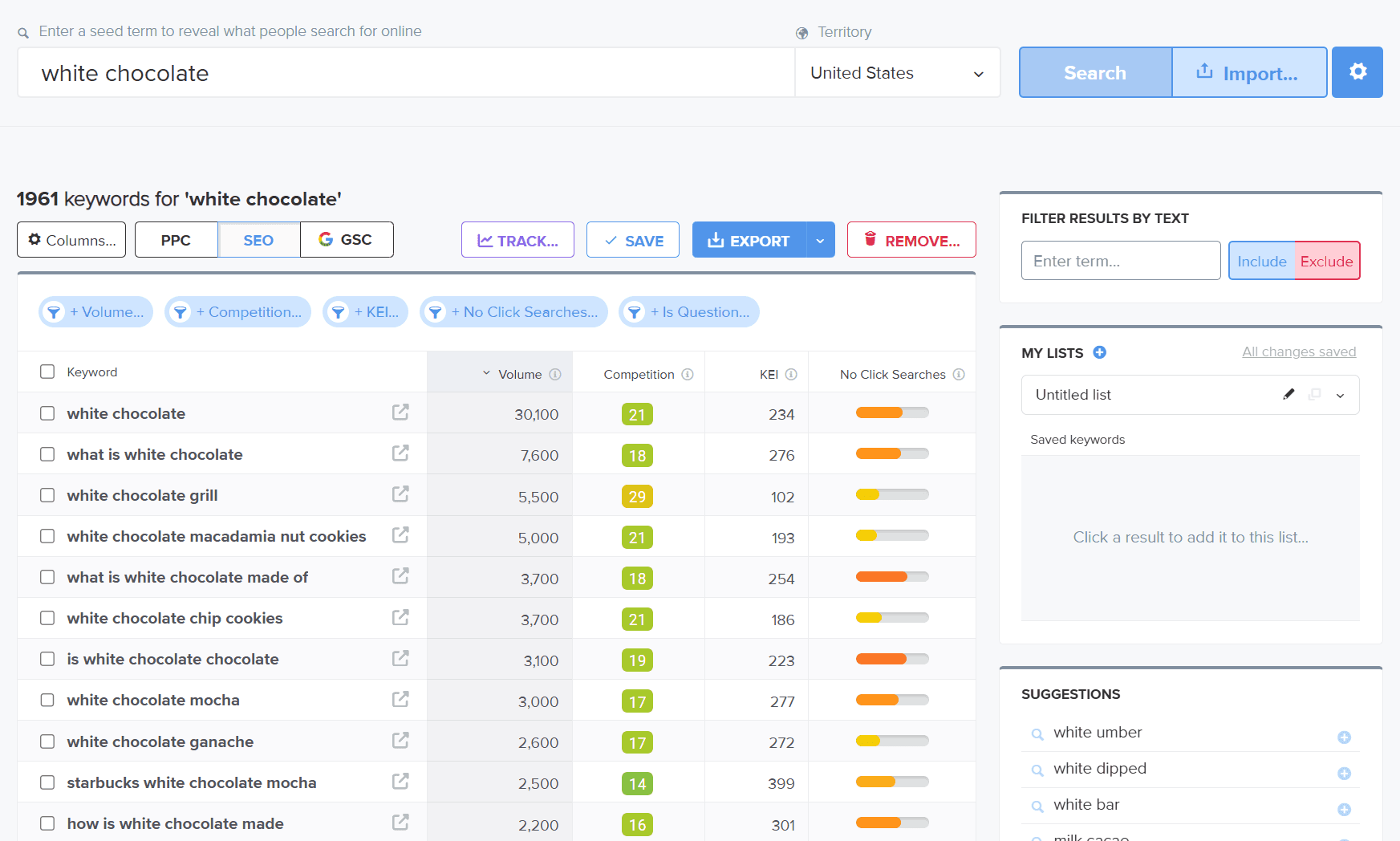
Wordtracker emphasizes clarity and actionability. Enter your keyword, select your territory (from 7 to 200+ options depending on your plan), and get clean results focused on what matters: search volume, competition scores, and clear KEI (Keyword Effectiveness Metrics Index) metrics. The SERP preview shows exactly who you're competing against, complete with trust flow and citation flow metrics. No credit counting means you can research thoroughly without watching limits.
Each platform serves its audience well—Semrush for comprehensive analysis, Keysearch for balanced functionality, and Wordtracker for focused efficiency.
Competitor analysis: Depth vs focus
All three platforms offer competitor analysis, but their approaches serve different strategic needs.
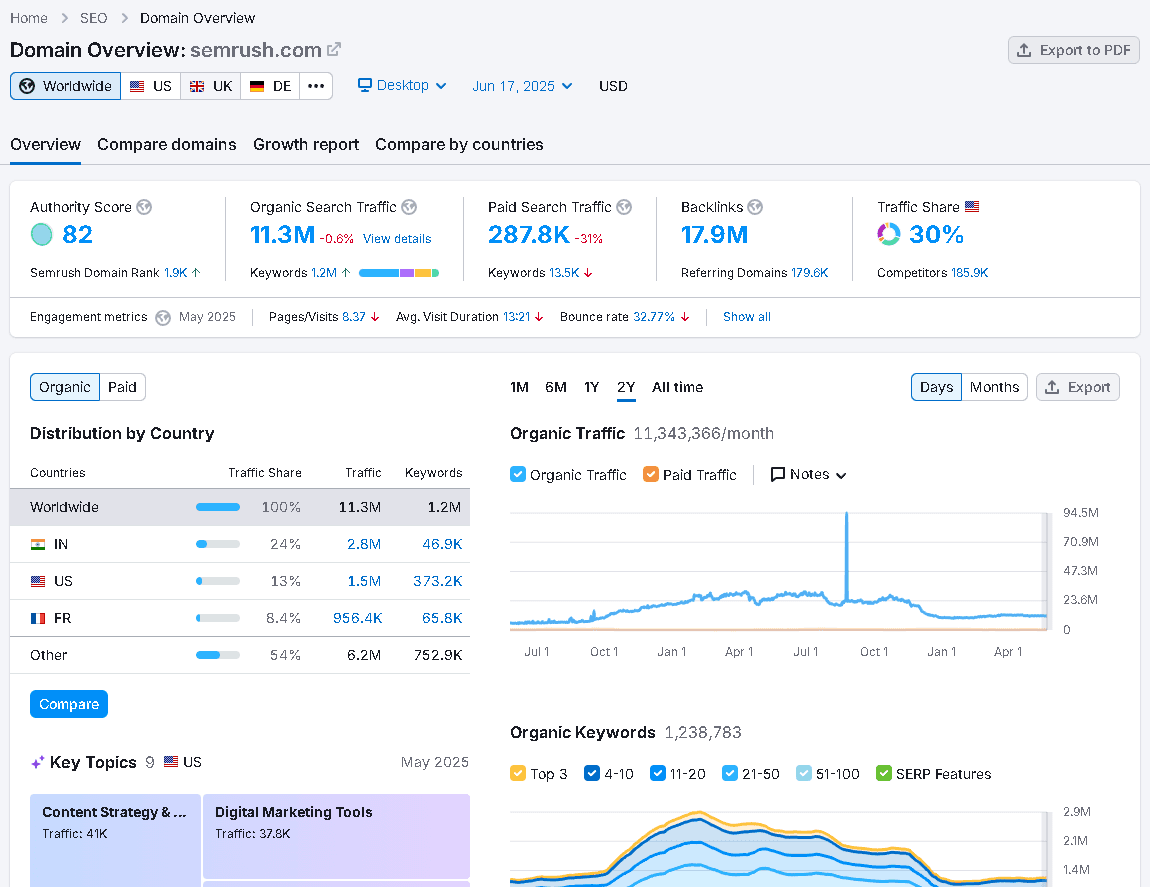
Semrush provides extensive competitor intelligence. Beyond keywords, you can analyze competitors' backlinks, PPC campaigns, display advertising, social media performance, and content strategy. The Domain Overview presents comprehensive metrics that help agencies build complete competitive landscapes. For organizations needing full-spectrum competitive intelligence, this breadth is invaluable.
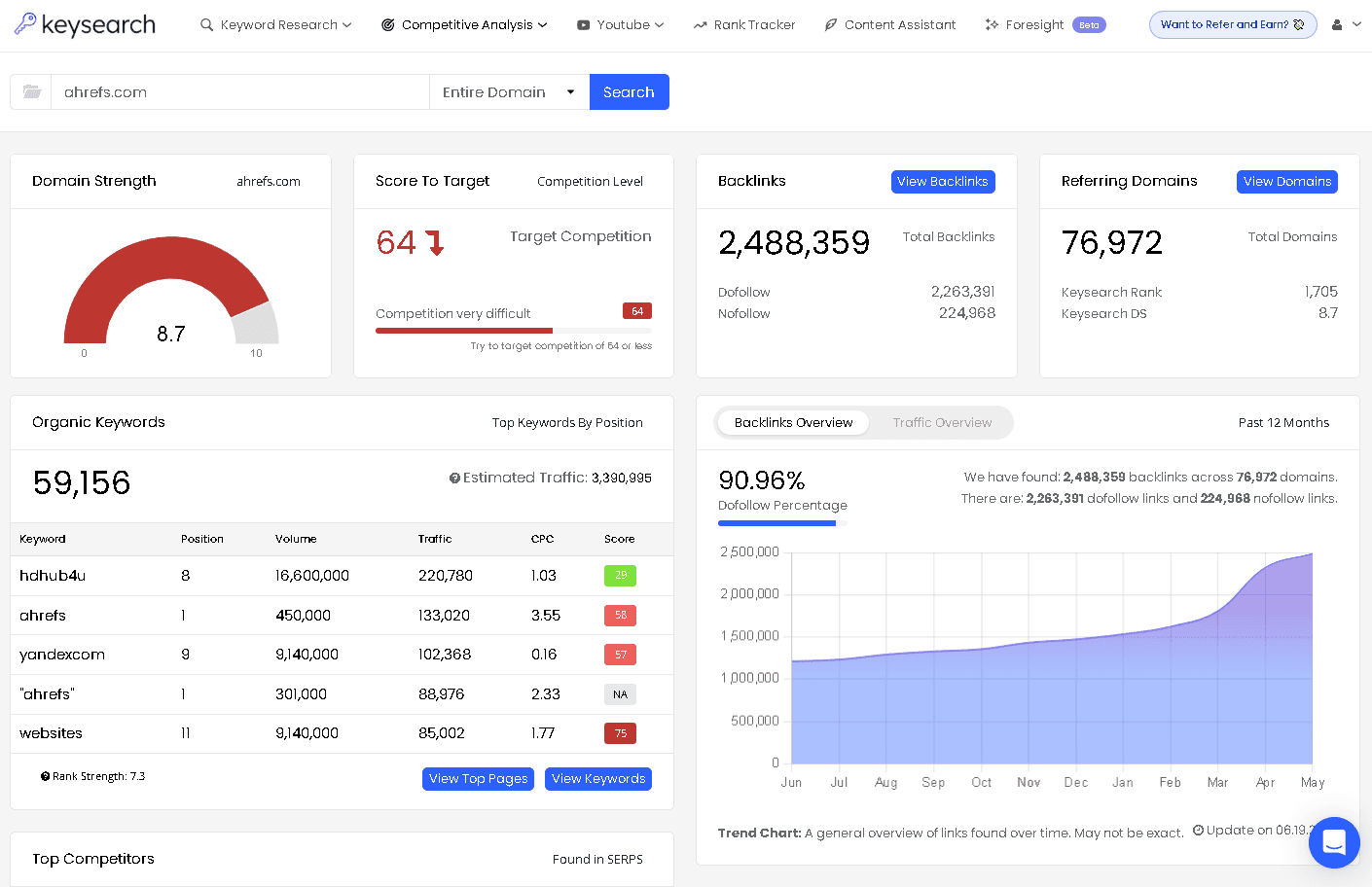
Keysearch delivers practical competitor insights through features like their Competitor Gap tool, which shows keywords your competitors rank for that you don't. The Organic Keywords analysis reveals top-performing terms with positions and traffic estimates. It provides solid competitive intelligence without overwhelming users, though each analysis uses daily credits.
Wordtracker's Domain Tool focuses specifically on keyword opportunities. Enter a competitor's domain to see their top-performing keywords, rising keywords, and traffic drivers. By concentrating on keyword intelligence rather than broader metrics, we help users quickly identify gaps they can target. The integration with rank tracking lets you monitor competitive performance over time.
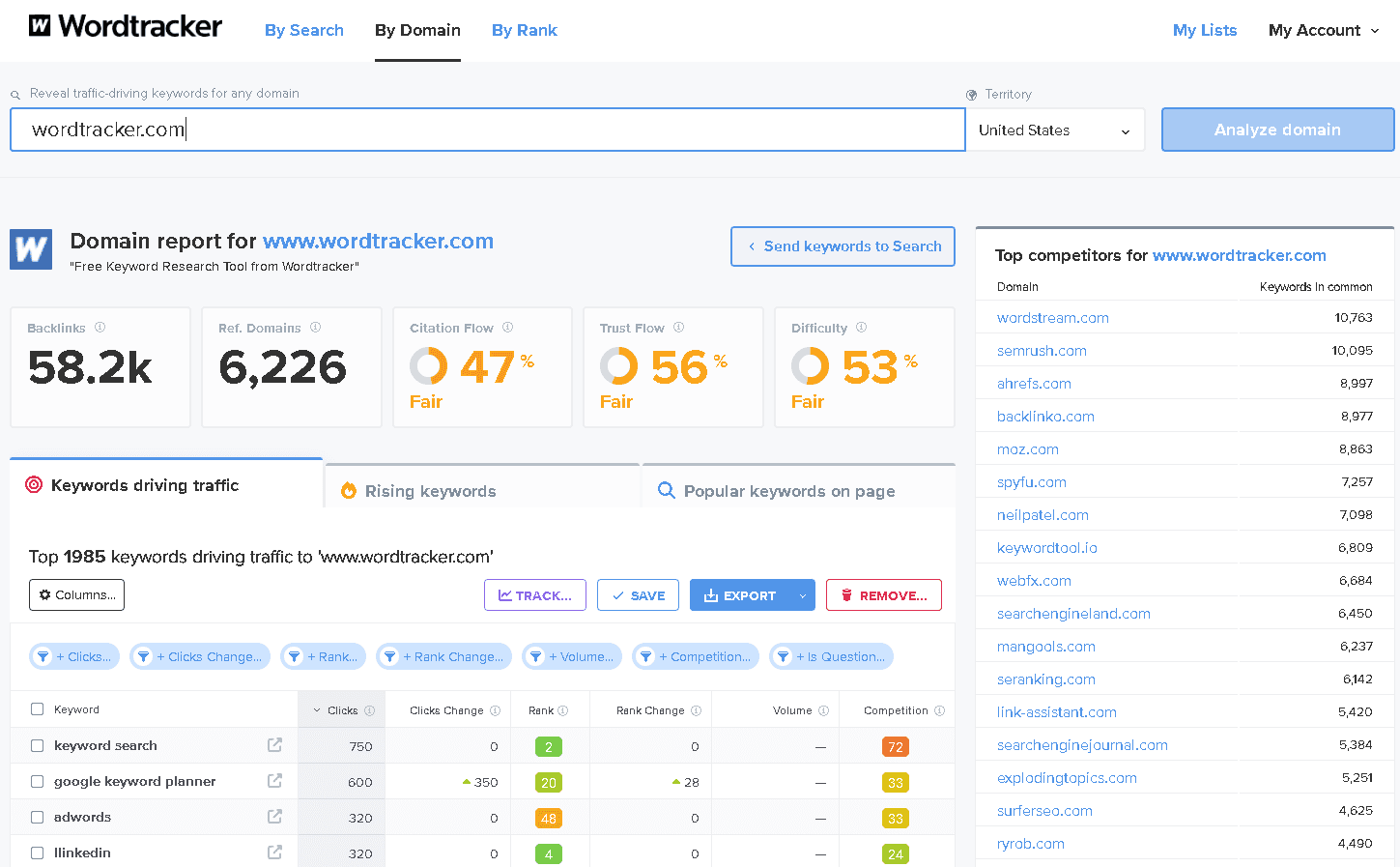
Different approaches for different needs: comprehensive intelligence, balanced insights, or focused keyword opportunities.
Rank tracking implementations
Even seemingly straightforward features like rank tracking reveal different design philosophies.
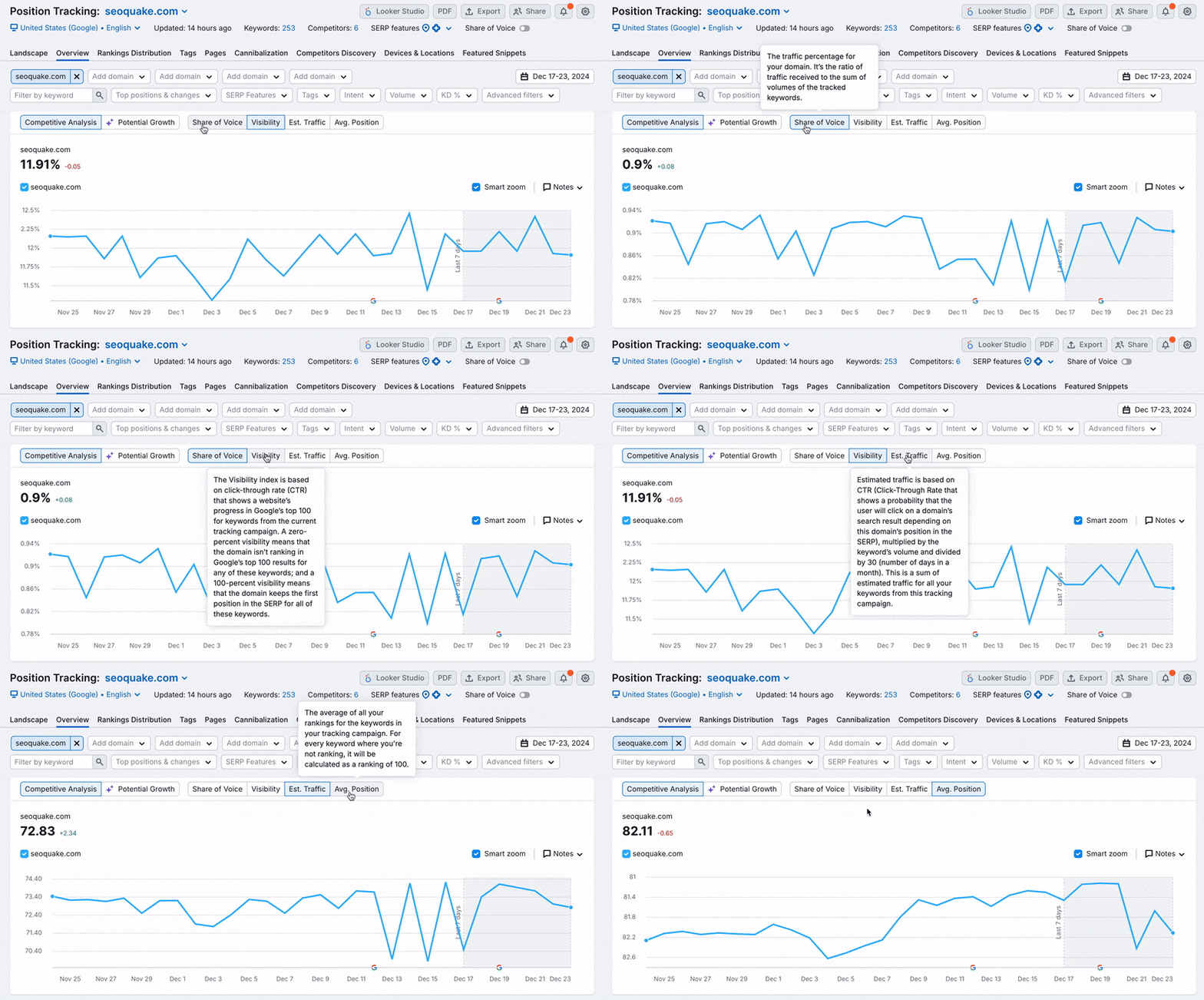
Semrush's Position Tracking offers extensive capabilities. Track 500 keywords on Pro up to 5,000 on Business, with multiple projects, locations, devices, SERP features, and visibility scores. The data richness particularly benefits agencies managing multiple clients who need detailed reporting and trend analysis.
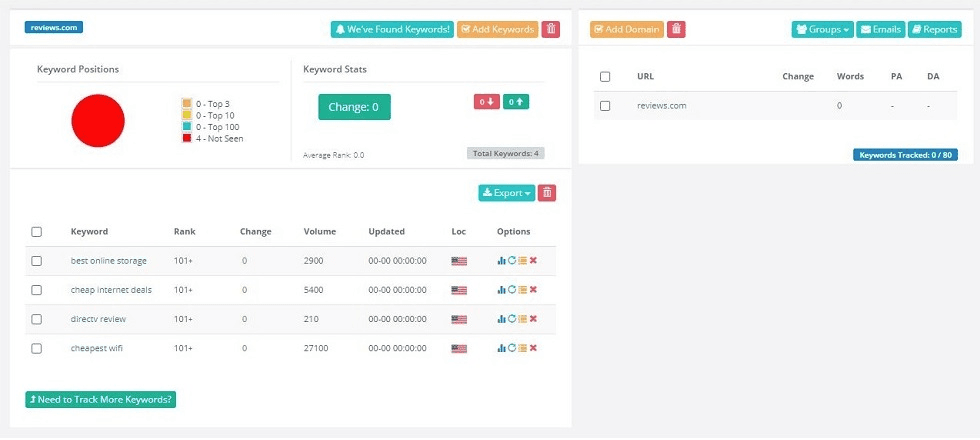
Keysearch includes rank tracking with clear limits: 80 keywords on Starter, 200 on Pro. The interface provides clean visualizations of rank changes and historical trends. These limits work well for individual sites and small businesses, though growing sites may need to prioritize which keywords to track.
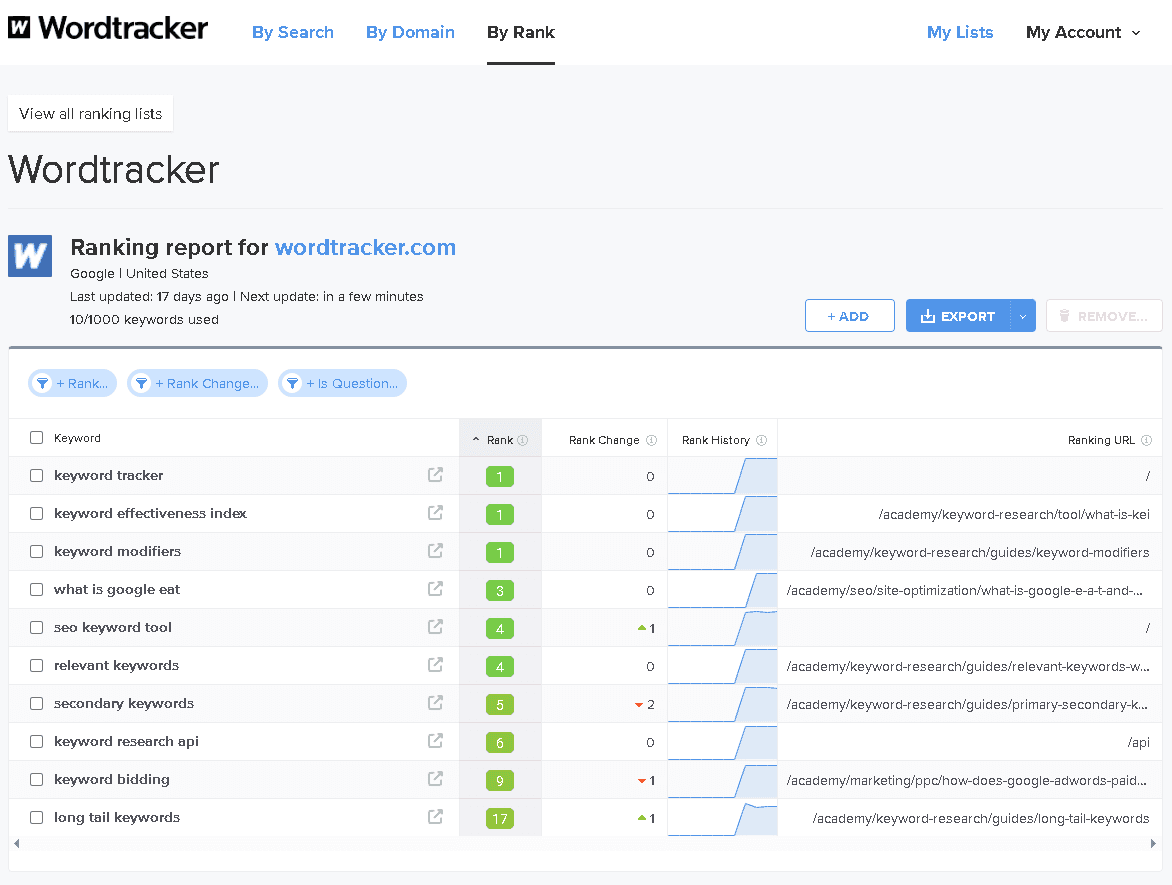
Wordtracker delivers generous tracking limits with straightforward implementation. Even the Bronze plan tracks 1,000 keywords—more than many competitors' premium tiers. No complex project setups needed—just add your keywords and monitor performance. The system sends regular email updates, keeping you informed without requiring daily logins. Gold plan users can track 10,000 keywords, providing room for growth.
Each platform's approach reflects its target audience and priorities.
Understanding the pricing models
Let's examine what each pricing structure delivers.
Semrush starts at $139.95/month for Pro, including 5 projects, 500 tracked keywords, and 3,000 reports per day. Guru ($249.95/month) and Business ($499.95/month) progressively expand these limits. The pricing reflects the platform's comprehensive nature—you're getting access to 50+ tools, extensive databases, and enterprise-grade infrastructure. For teams using multiple features, the value proposition is clear.
Keysearch offers accessible pricing at $24/month for Starter with 200 daily searches and 80 tracked keywords. Pro ($48/month) increases limits to 500 searches and 200 tracked keywords. The credit system helps maintain these price points while providing access to multiple features. Users who understand their usage patterns can work effectively within these parameters.
Wordtracker's pricing emphasizes transparency and value. Bronze at $24/month includes 500 daily keyword searches and 1,000 tracked keywords—no credits, just straightforward daily limits. Silver ($69/month) doubles your daily searches to 1,000 and expands tracking to 5,000 keywords. Gold ($99/month) provides unlimited keyword searches and 10,000 tracked keywords for serious professionals. Every plan includes access to all territories and the same core tools. Wordtracker is the most affordable way to access professional keyword intelligence.
Integration strategies
Integration approaches reflect each platform's ecosystem philosophy.
Semrush connects with numerous platforms—Google Analytics, Google Search Console, social media platforms, CRM systems, and hundreds more through Zapier. This extensive integration network supports enterprises with complex tech stacks who need data flowing seamlessly between systems. The setup complexity is offset by the workflow efficiency for teams using multiple integrated tools.
Keysearch provides strategic integrations via API access on higher plans, enabling custom connections and data exports. This balanced approach gives businesses flexibility without overwhelming them with options, fitting well with their accessible positioning.
Wordtracker focuses on high-value integrations, particularly with Google Search Console. This integration adds crucial columns to your keyword research: impressions, clicks, CTR, and position data. By focusing on integrations that directly enhance keyword decisions rather than trying to connect with every possible platform, we maintain simplicity while delivering real value.
Semrush vs Keysearch vs Wordtracker: Making your choice
The best keyword research tool aligns with your specific needs, workflow, and goals.
Choose Semrush if:
- You manage multiple large websites or client accounts
- You need integrated social media, PPC, and content marketing tools
- You have a team that can leverage comprehensive features
- Your budget accommodates enterprise-level investment
- You value having extensive data and capabilities in one platform
Choose Keysearch if:
- You want to try multiple SEO features at an accessible price
- You're exploring different SEO tools to find what works
- You don't mind navigating between various features
- You're comfortable managing credit-based systems
- You prefer having many options over specialized efficiency
Choose Wordtracker if:
- You're a smart marketer who values both time and budget
- You want the most efficient keyword research workflow possible
- You prefer interfaces designed for speed over feature quantity
- You need professional keyword data at the most affordable price
- You appreciate generous daily searches (500 to unlimited) without credit hassles
Experience focused keyword research
Ready to see what professional-grade keyword research looks like without the complexity? Try Wordtracker for just $10 for your first month.
The SEO tool landscape offers excellent options for every philosophy and budget. Whether you need comprehensive marketing platforms, balanced all-in-one solutions, or specialized keyword research tools, success comes from choosing the approach that best matches your workflow and goals. Each platform has found its niche by serving specific user needs effectively—your task is identifying which philosophy aligns with yours.
This article was originally published in March 2026.